


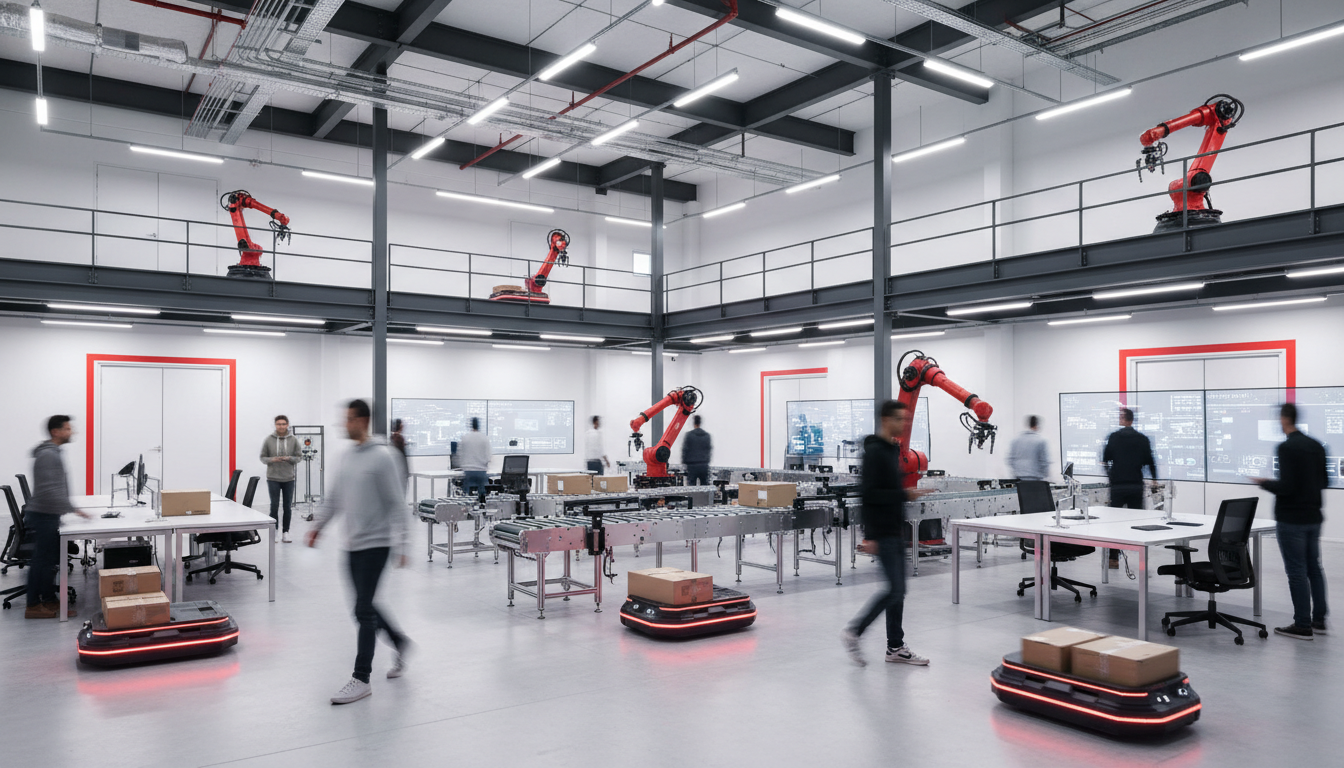
Robotics and Automation in Warehouses: A Director of Recruiting’s Playbook for Hiring, Upskilling, and Retention
Robotics and automation in warehouses combine autonomous mobile robots (AMRs), automated storage and retrieval systems (AS/RS), vision, and AI-driven orchestration to boost throughput, accuracy, and safety. For Directors of Recruiting, this shift redefines frontline roles, elevates technical skills, and rewards teams that hire, upskill, and retain talent for human-robot collaboration.
Warehouse leaders are racing to hit tighter SLAs with fewer errors and safer floors. Automation is no longer a pilot; it’s a performance mandate—reshaping job requirements from pure manual labor to tech-enabled execution. McKinsey notes warehouse automation is scaling rapidly across functions, from picking to sortation, as shipments and SKUs surge. Gartner forecasts that mobile robotics for supply chains will mature quickly in two to five years, changing management roles and day-to-day work. The result for Recruiting: new roles to staff, new skills to validate, internal talent to reskill, and an employer brand that must reassure and inspire. This guide gives you a proven blueprint—skills-first profiles, sourcing tactics, assessments, reskilling programs, safety governance, and ROI metrics—so your team can build a future-ready, automation-powered workforce without losing speed, fairness, or humanity.
Why warehouse robotics is changing your hiring plan now
Warehouse robotics is changing your hiring plan now because adoption is accelerating, roles are blending hands-on and technical skills, and safety and throughput targets demand talent who can operate, maintain, and improve automated systems.
Automation is shifting the job mix from pure pick/pack to hybrid roles: AMR operators, automation technicians, mechatronics techs, WMS analysts, vision QA associates, and flow coordinators. According to Gartner, mobile robotics capabilities are advancing quickly for supply chains, while Gartner also projects that by 2030 some supply chain leaders will manage robots rather than humans—signaling a durable talent mix change across facilities. McKinsey’s guidance on getting warehouse automation right underscores the execution side: robot shipments are rising fast, but the ROI depends on people who can run, troubleshoot, and improve the system day to day. Meanwhile, safety and compliance pressures remain high; BLS data shows warehousing and storage has one of the higher nonfatal injury rates among service industries, making ergonomic risk reduction through automation a shared goal across HR, Ops, and EHS. For Recruiting, this means refreshed scorecards, new assessments, more targeted sourcing for tech-leaning frontline talent, and strong upskilling pathways to retain your incumbents.
Build a skills-first hiring blueprint for automated warehouses
You build a skills-first hiring blueprint by defining role scorecards around systems fluency (WMS/AMRs), troubleshooting, safety, quality, and continuous improvement, then hiring and upskilling to those competencies rather than titles alone.
What warehouse automation jobs are in demand?
The warehouse automation jobs most in demand are AMR/fleet operators, automation and mechatronics technicians, controls technicians, WMS/WES superusers, inventory accuracy analysts, vision QA associates, maintenance planners, and EHS techs experienced with robotic cells.
Under the hood of “automated warehouse” are capabilities that need people: AMR dispatch and exception handling; conveyor/sorter tuning; sensor and vision calibration; first-response troubleshooting; and system-to-people coordination when reality doesn’t match the plan. Create crisp role profiles that tie back to value streams (receiving, putaway, picking, packing, replenishment, cycle counting) and the automation layers in play (AMRs, AS/RS, shuttle systems, goods-to-person, pick-to-light, vision). Scorecards should list must-have skills (e.g., basic PLC diagnostics, RF scanners, safety lockout/tagout, WMS tasking) and adjacency skills (e.g., mechatronics certs, Python basics for logs, Kaizen/5S, root cause analysis).
What skills should you hire and upskill for robotics?
The critical skills to hire and upskill for robotics include systems literacy (WMS/WES/HMI), first-line troubleshooting, preventive maintenance basics, data capture and interpretation, safety protocols, and continuous improvement practices.
Go beyond tool names to competencies you can observe: follow a standard operating procedure on an HMI, triage an AMR stop, execute LOTO correctly, interpret a fault code, complete an autonomous cycle count with verification, and document a small Kaizen ticket with before/after metrics. For leadership paths, add flow-of-work planning, cross-dock logic, and exception triage. Make these competencies explicit in job ads and interview rubrics. Standardization lets you scale hiring faster and fairer—see how skills-first automation elevates consistency and speed in your recruiting workflows using guidance from “How AI Automation Transforms Talent Acquisition and Recruiting” (read the EverWorker guide at this article).
Redesign your recruiting funnel for frontline–tech hybrid roles
You redesign your recruiting funnel by sourcing where tech-leaning frontline talent lives, personalizing outreach, testing hands-on skills early, and removing friction with automated scheduling and clear, human communication.
How do you source automation technicians and AMR operators?
You source automation technicians and AMR operators by targeting adjacent pools (field service techs, maintenance apprentices, military MOS with electromechanical skills, forklift pros with WMS experience) and by nurturing passive talent with personalized, skills-first outreach.
Look beyond job titles to skills adjacency: mechatronics bootcamps, community-college programs, and incumbent associates who consistently ace cycle counts or RF workflows. Use skills-based filters in job boards and talent networks; pair with personalized messaging that references your specific systems and growth paths. AI can help here, identifying and engaging passive candidates at scale while protecting your brand voice; see “How AI Transforms Passive Candidate Sourcing in Recruiting” for proven patterns and guardrails at this EverWorker guide.
How should you assess practical skills without bias?
You should assess practical skills without bias by using short, job-relevant work samples (e.g., fault-code triage, HMI navigation, safety scenarios), redacting protected attributes, and applying standardized rubrics with humans in the loop.
Replace generic tests with hands-on simulations that mirror your stack: a 10-minute AMR exception drill, a WMS pick-path validation, or a lockout/tagout checklist audit. Keep the evaluation observable and scored against the same rubric for every candidate. Document criteria, rationale, and adverse-impact checks to strengthen fairness and auditability; for explainable, consistent recruiting processes at scale, explore “How AI Workers Are Transforming Recruiting” at this EverWorker article. Finally, compress logistics with interview automation to protect momentum—see scheduling best practices in “How AI Interview Platforms Transform Recruiting Efficiency and Fairness” at this overview and instant slotting patterns in “How Automated Interview Scheduling Accelerates Hiring” at this guide.
Retain and reskill your incumbent workforce at scale
You retain and reskill your workforce by creating transparent internal mobility paths, paying for targeted certifications, offering paid cross-training rotations, and celebrating safety and quality wins that automated systems help unlock.
How do you create internal mobility paths for warehouse associates?
You create internal mobility paths by publishing laddered roles (Associate → AMR Operator → Automation Technician → Controls Technician), mapping each step to clear skills, and opening recurring internal cohorts with guaranteed interview SLAs.
Start with role scorecards and a skills gap map for incumbents; design 8–12 week micro-upskilling sprints aligned to your systems (e.g., AMR ops, first-line troubleshooting, vision-assisted QC). Protect equity by standardizing entry criteria and offering study time on shift. Pair each cohort with mentors and tie completion to pay bands. Promote graduates company-wide, spotlighting “human + robot” wins in safety, accuracy, and throughput. This isn’t charity—it’s retention. When associates see a future in your automated facility, they choose you over competitors.
What training partnerships accelerate upskilling?
The training partnerships that accelerate upskilling are local community colleges, mechatronics bootcamps, vendor academies for your AMR/ASRS stack, and cross-functional internal labs where associates practice on real or simulated systems.
Co-develop short modules with partners and vendors—HMI basics, AMR safety paths, preventive maintenance checks, barcode/vision troubleshooting, WMS picking logic, cycle-count autonomy. Keep content job-relevant and assessable in minutes, not hours. Offer recognized credentials where possible and align completion with wage progression and rotation opportunities. Track uplift in safety, quality, and throughput per graduate to prove ROI and earn budget support quarter after quarter.
Safety, compliance, and employer brand in the age of robots
You strengthen safety, compliance, and brand by combining robotics with human-centered EHS, transparent change communications, and data-backed proofs that the floor is safer and growth-ready.
Do robots reduce warehouse injuries, and how should HR respond?
Robotics can reduce ergonomic and repetitive-strain risks by taking on heavy lifts and repetitive travel, while HR should respond by updating SOPs, retraining, and measuring injury rates and near misses rigorously.
Warehousing carries elevated injury risk compared with many service industries; BLS data shows warehousing and storage (NAICS 4931) having higher-than-average nonfatal injury and illness incidence rates nationally (BLS industry table; see also BLS NAICS 493 profile). Robots aren’t a silver bullet—but when paired with engineered controls, training, and culture, they help. Implement ergonomic assessments pre/post deployment, ensure LOTO and safe-zoning are trained and enforced, and publish improvements internally to build trust. Recognize safety behaviors publicly; that story strengthens recruiting and retention.
How should we communicate automation changes to protect retention?
You should communicate automation changes by framing robots as teammates that remove drudgery, offering paid upskilling with clear paths to higher pay, and involving frontline leaders in pilot design and safety validation.
Address common fears head-on: “No layoffs tied to this rollout,” “Paid time to learn,” “Guaranteed internal interviews post-training,” and “Robots do the heavy walking; people make the decisions.” Share before/after metrics—near misses, first-pass accuracy, on-time orders—to make progress tangible. Externally, highlight safety gains, career ladders, and technology in your employer brand—today’s candidates want modern tools and growth, not just a paycheck. Use your recruiting stack to scale communications with humanity and speed—see how AI-augmented recruiting keeps messages timely and on-brand at this EverWorker guide.
From generic automation to AI Workers: your new talent operating model
AI Workers are the next evolution for recruiting and operations because they don’t just trigger tasks; they own outcomes across your systems, learn your rules, and document every decision—so humans can focus on judgment, coaching, and continuous improvement.
Inside the four walls, AI agents already optimize slotting, orchestrate AMRs, and re-sequence picks when reality changes—driving faster paths, steadier flows, and fewer stockouts; see warehouse and logistics agent patterns in “Agentic AI Use Cases for Manufacturing” at this primer and inventory accuracy levers in AI Inventory Forecasting. In Talent Acquisition, outcome-owning AI Workers source passive talent, standardize evaluations, and schedule interviews instantly—while you set policy and keep humans in the loop; for operating rhythms and guardrails, read “How AI Workers Are Transforming Recruiting” at this article. This is the abundance model: Do More With More. More throughput with safer jobs. More internal mobility with higher wages. More candidate trust with faster, fairer processes. And because every move is logged, your audits get easier and your data gets cleaner—fuel for continuous improvement.
Plan your AI-ready recruiting strategy for automated warehouses
You can make measurable progress in 60–90 days by refreshing scorecards, piloting skills-based assessments, standing up internal upskilling cohorts, and automating sourcing and scheduling—then expanding what works.
Where warehouse recruiting leaders go from here
Robotics and automation are here, and talent is the difference between stalled pilots and step-change performance. Define skills-first roles, source from adjacent pools, assess what matters on the floor, and open visible upskilling paths for your people. Combine safety-first operations with human-centered communications, and modernize your recruiting engine with AI Workers to remove friction and elevate judgment. As Gartner and McKinsey note, robots are scaling—and the companies that win will be those whose people can run and improve the system. Build that workforce now and turn automation into your talent advantage.
FAQs
Will automation eliminate warehouse jobs?
No—automation reshapes jobs toward tech-enabled work, safety, and flow control, while overall demand for fulfillment and service levels sustains labor needs; the mix shifts to operators, technicians, and analysts.
Which certifications help candidates thrive in automated warehouses?
Helpful credentials include mechatronics certificates, basic PLC/controls coursework, OSHA 10/30 for safety, vendor-specific AMR/ASRS training, and WMS superuser badges aligned to your stack.
How should we measure hiring success for robotics-era roles?
Track time-to-slate, skills assessment pass rates, first-90-day retention, safety incidents per new hire, quality/accuracy per shift, and time-to-autonomy on target systems.
What external trends confirm we should act now?
McKinsey highlights rapid growth in warehouse automation, Gartner shows accelerated maturation of mobile robotics in supply chains, and BLS data underscores ongoing safety imperatives—together signaling an urgent, durable shift.
Further reading: McKinsey’s “Getting warehouse automation right” (link); Gartner Hype Cycle for advanced mobile robots in supply chains (press release); Gartner prediction that some supply chain managers will manage robots rather than humans by 2030 (press release); BLS warehousing injury rates (table, industry profile).




 Anton Antich
 Austin Braham
 Christopher Good