


AI Onboarding Platforms for Warehouse Workers: Faster Starts, Safer Shifts, Stronger Retention
AI onboarding platforms for warehouse workers automate offer-to-first-shift workflows—documents, I‑9/E‑Verify, safety training, provisioning, scheduling, and manager touchpoints—so new hires arrive ready, confident, and compliant. Designed for high-volume, multi-shift operations, they cut time-to-productivity, reduce early attrition, and standardize safety and audit trails across sites.
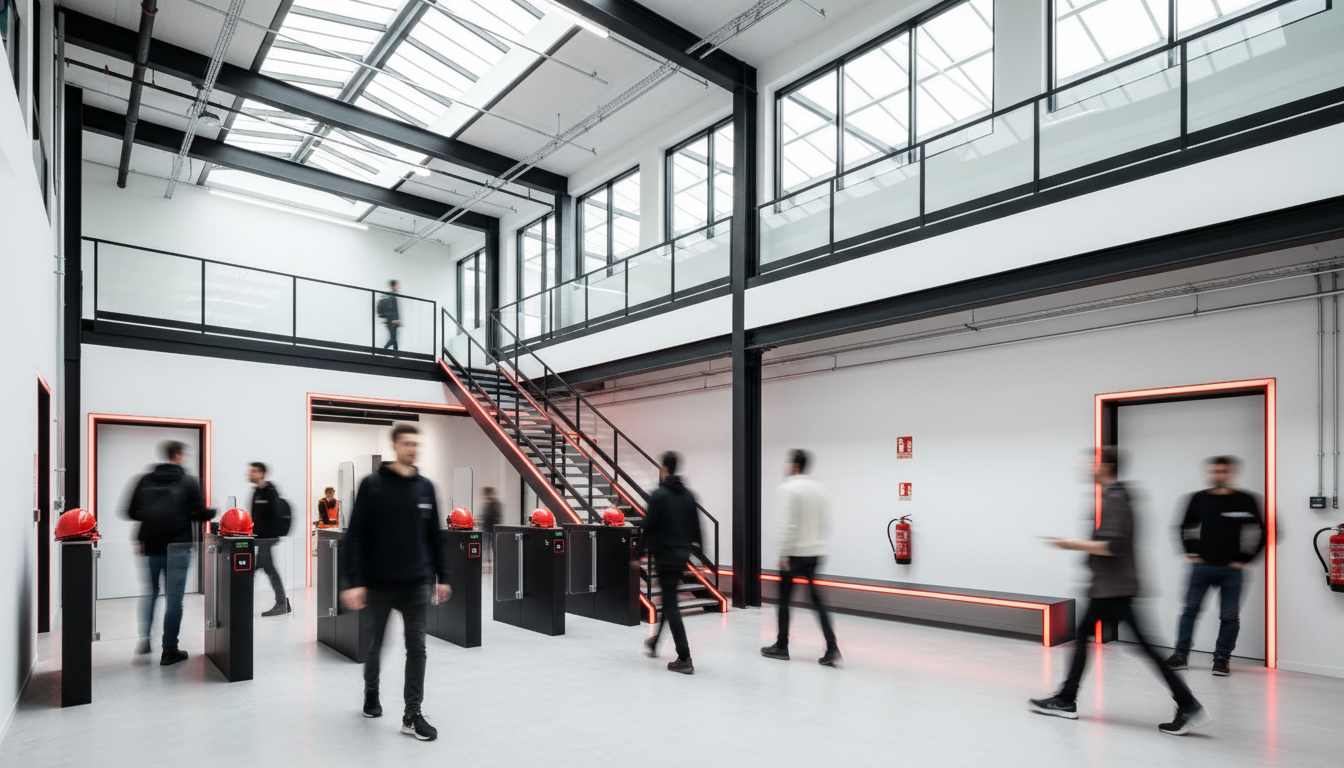
Picture peak season: every associate shows up on day one with badges issued, timeclock enrolled, forklift training assigned, PPE sized, and shift orientation scheduled—in their language, on their phone. No lines. No paper chases. No equipment waiting games. This is what modern AI onboarding delivers for warehouses.
Here’s the promise: your team accelerates time-to-first-shift, lifts 30/60/90-day retention, and reduces incidents by standardizing training and access across facilities—without adding headcount. And the proof is growing: HR leaders report faster cycles and stronger experiences when AI executes cross-system work, while OSHA’s guidance reinforces how consistent training and safe provisioning reduce common warehouse hazards. According to Gartner, AI is already improving talent acquisition and HR operations when paired with clear guardrails. You’ll see how to deploy it in weeks—not months—using the systems you already own.
The real warehouse onboarding problem (and why your metrics leak after “offer accepted”)
Warehouse onboarding breaks when manual handoffs slow access, safety training, and scheduling, creating no-shows, injuries, and early churn that inflate cost-per-hire and overtime.
As a Director of Recruiting, your team fills classes quickly—but day one is where the leak begins. Warehouses rely on repeatable steps across HR, IT, safety, and site ops: I‑9/E‑Verify, badge photos, timeclock setup, PPE sizing, equipment training (forklift, pallet jacks), LMS assignments, and manager introductions. When those steps live in disconnected tools and spreadsheets, candidates wait, coordinators chase, and supervisors scramble. OSHA highlights common warehouse hazards—forklifts, stacking, ergonomics, and slips/falls—that require clear training and controls; inconsistency here raises risk and lowers confidence on the floor. Meanwhile, BLS Job Openings and Labor Turnover data shows separations in transportation and warehousing are persistently high, which puts more pressure on early retention to stabilize staffing.
Why it matters to you: time-to-first-shift drags; early resignations spike at day 10–45; rework drains coordinators; and ops covers gaps with overtime or agencies. Candidates who felt “seen” during recruiting can feel “lost” during onboarding—hurting employer brand, referrals, and show rates. The fix isn’t more checklists; it’s an AI execution layer that runs the workflow across ATS, HRIS, E‑Verify, LMS, WFM, and site systems—and only escalates exceptions. That’s how you protect your hiring investment where it counts: the first shift and the first 90 days.
What an AI onboarding platform must do for warehouses
An AI onboarding platform for warehouses must orchestrate documents, compliance, training, provisioning, and scheduling end to end—mobile-first, multilingual, auditable, and resilient across sites.
How do AI onboarding platforms handle I‑9, E‑Verify, and compliance for warehouses?
They handle I‑9 and E‑Verify by guiding new hires through document capture, validating entries, triggering E‑Verify checks, and storing timestamped records with audit logs and approvals.
The system maps role/location rules, generates the correct packets, and routes exceptions (e.g., document mismatch) to the right owner with context. For safety and policy compliance, it assigns the right LMS path (e.g., powered industrial truck awareness) and captures acknowledgments before floor access. OSHA’s warehousing resources outline hazard categories that these training paths must cover; AI ensures the right sequence is completed and evidenced before a badge is activated.
Can AI onboarding work for warehouse hires without corporate emails?
Yes, AI onboarding works via SMS, QR codes, and kiosks so associates can complete steps without a corporate email or desktop access.
Mobile-first, multilingual flows meet candidates where they are. Links authenticate with secure tokens, collecting documents, signatures, and training confirmations on a phone. For walk-ins, on-site kiosks or tablets provide the same guided experience with translations and accessibility options to support varying literacy levels—reducing coordinator setup time and line bottlenecks.
How does it standardize safety and access across multiple sites?
It standardizes safety and access by encoding role- and site-specific rules, auto-provisioning identity/access, and gating floor permissions until required training is complete.
The platform integrates with identity and badge systems, timeclocks, and WFM tools to ensure no one clocks in or operates equipment before completing training and policy acknowledgments. OSHA’s Warehouse Safety publication enumerates common risk points; the AI uses those rules to sequence training and verify completion with immutable logs. Consistency across facilities reduces variance—and risk.
For a deeper blueprint of outcome-focused onboarding automation, see EverWorker’s guide to reducing ramp time with AI Automated Employee Onboarding Playbook and how HR agents execute across ATS/HRIS/LMS AI Agents Transform HR Operations.
How to automate offer-to-productive day for hourly warehouse hires
You automate offer-to-productive day by connecting your ATS, HRIS, E‑Verify, background checks, LMS, WFM/scheduling, and site systems to a single AI worker that acts on events and escalates exceptions.
What are the must-have integrations for warehouse onboarding?
Must-have integrations include ATS (trigger), HRIS (system of record), E‑Verify/I‑9 vendor, background checks, LMS (safety), identity/badge, timeclock/WFM, and messaging (SMS/WhatsApp/Email).
Map events: Offer Accepted, Start Date Set, I‑9 Section 1 Completed, E‑Verify Cleared, Training Completed, Badge Issued, First Shift Scheduled. For each event, define actions: send packets, kick off verifications, assign training, provision access, schedule orientation, and record every step. This is the execution layer that keeps candidates moving without coordinator babysitting. See how connecting ATS to HR tools compresses cycle time in EverWorker’s AI ATS Integration.
How do you cut time-to-first-shift for warehouse new hires?
You cut time-to-first-shift by parallelizing checks, auto-assigning training, and pre-scheduling orientation and first shifts as soon as compliance gates clear.
Instead of linear steps, AI runs them concurrently and watches for blockers. Once prerequisites complete, it holds shift slots, sends confirmations and reminders, and updates WFM/HRIS instantly. Coordinators see live status and intervene only on exceptions (e.g., background escalation), which accelerates readiness without sacrificing control.
How does AI support multi-language and low-connectivity environments?
AI supports multi-language and low-connectivity by delivering localized content via lightweight mobile pages and fallback SMS, with kiosk modes for on-site completion.
Translations, voiceover prompts, and iconography reduce cognitive load. Progress is cached and synced, so spotty connectivity doesn’t derail completion. Managers receive nudges in their preferred language too—so accountability doesn’t break on the last mile.
For role-specific assistant capabilities—answering FAQs, reducing HR tickets, and personalizing journeys—explore AI Onboarding Assistants.
Reduce early turnover and injuries with guided ramping
You reduce early turnover and injuries by sequencing safety microlearning, buddy check-ins, and manager touchpoints through day 7/30/60/90 while gating risky tasks until training is complete.
Do new warehouse hires face higher safety risk—and how can AI reduce it?
New hires face elevated risk when they start without complete training or clear procedures, and AI reduces it by enforcing training completion and documenting acknowledgments before floor access.
OSHA’s warehousing resources emphasize hazards—forklifts, material handling, ergonomics, slips/falls—and the need for effective training and controls. AI ensures each new hire completes the right modules (with language support), verifies understanding, and logs proofs. It can delay badge activation for restricted zones or equipment until completion is confirmed, reducing first‑month exposure.
How does AI lower 30/60/90-day attrition for warehouse roles?
AI lowers early attrition by aligning expectations, reducing first-week confusion, and nudging managers to deliver the “moments that matter” that build belonging.
New hires receive personalized guides and quick answers (benefits timing, schedules, payroll), while managers get reminders to set expectations, make intros, and recognize early wins. HBR highlights how structured onboarding boosts preparedness and commitment; AI operationalizes that structure in every site, every cohort.
Can AI track certifications and re-training for equipment like forklifts?
Yes, AI tracks equipment certifications and expirations by syncing LMS/xRM data, sending reminders, and escalating overdue items with audit-ready logs.
Supervisors see who is certified, who is expiring, and who should be scheduled for re-training—reducing last-minute scrambles and safety risk. Policy updates trigger targeted attestations with stored proofs.
Explore how end-to-end orchestration raises completion and compliance in EverWorker’s HR execution overview AI Agents Transform HR Operations.
ROI and KPIs a Director of Recruiting can control
You prove ROI by tying faster onboarding execution to reduced time-to-first-shift, higher show rates, better early retention, fewer HR tickets, and lower agency/overtime dependence.
Which onboarding metrics move first in warehousing?
The first movers are offer-to-ready cycle time, on-time completion of compliance/training, first-shift show rate, and manager onboarding task completion.
As execution stabilizes, you’ll see early retention lift (day 30/60/90), HR ticket deflection (fewer Tier‑1 questions), and improved safety training completion before floor access. Candidate NPS for day one improves when wait time and confusion drop.
How do you build the business case with Finance and Operations?
You build the case by quantifying earlier productive hours, fewer rehires, lower OT/agency costs, and reduced incident risk from consistent safety training and access control.
Translate hours saved into capacity (reqs per recruiter) and into earlier contribution on the floor. Attach avoided spend and risk reduction to a phased rollout. For a practical approach to investment and metrics baselines, review EverWorker’s ATS integration playbook Streamline Hiring and Boost ROI and onboarding execution guide Automated Onboarding Playbook.
What evidence convinces Safety and HR Compliance?
Evidence that convinces includes immutable logs of training, acknowledgments, and access provisioning—mapped to OSHA-relevant hazards and your policies by role/site.
Provide time-stamped artifacts linked to each employee, show exception routing and closure, and standardize audit reports. Pair this with OSHA’s warehousing guidance to demonstrate alignment with recognized hazard controls.
30-60-90 day implementation plan for peak season readiness
You can go live in 90 days by piloting a high-volume role at two sites, integrating core systems, instrumenting metrics, and scaling in waves with clear guardrails.
What is a practical 30‑60‑90 day plan to deploy AI onboarding before peak?
A practical plan starts with a 30‑day shadow pilot, adds manager nudges and exception routing by day 60, and scales to more roles/sites by day 90.
- Days 0–30: Connect ATS/HRIS/E‑Verify/LMS/WFM. Pilot one role (e.g., picker/packer). Run in shadow mode (AI drafts; humans approve). Baseline cycle time, completion rates, and show rate.
- Days 31–60: Turn on auto-actions with approvals for sensitive steps (E‑Verify submission, badge/identity). Add manager nudges and orientation scheduling. Target: 20–40% faster offer-to-ready and >95% safety completion pre–first shift.
- Days 61–90: Expand to forklift/floor leads, add multi-language content across sites, publish weekly dashboards, and finalize audit reporting. Target: +8–12 pts first-shift show rate, lower day‑30 churn.
How do you manage risk, privacy, and governance during rollout?
You manage risk with role-based permissions, approvals for sensitive actions, least-privilege access to systems, and full audit logs for every step.
Publish a clear RACI across HR Ops (workflows), Safety (training content), IT (integrations/security), and Site Leaders (readiness confirmation). Start small, measure weekly, expand by adjacency. For governance models that hold up, see EverWorker’s HR execution guidance AI Agents Transform HR Operations.
Checklists and portals don’t onboard people—AI Workers do
AI Workers outperform generic onboarding portals because they execute the work across systems, adapt to context, and own outcomes—so people start safely, on time, and with clarity.
Static portals collect forms; they don’t schedule orientation, verify E‑Verify, hold shift slots, gate badge access, or nudge managers at the right moments. AI Workers read your rules, act inside your ATS/HRIS/LMS/WFM, and escalate exceptions with full context. They don’t replace coordinators; they remove the glue work so your team focuses on judgment and care. That’s “Do More With More”: more throughput, more readiness, more retention—because execution happens reliably in the background. Explore the difference between assistants, agents, and outcome-owning workers in EverWorker’s onboarding series Automated Employee Onboarding Playbook and how AI lifts HR-wide outcomes From Faster Hiring to Better Experience.
Design your warehouse onboarding blueprint
If your first week still depends on paper packets and hallway heroics, it’s time to install an execution layer. We’ll map your roles and sites, connect your stack, and stand up a measurable pilot—so your next cohort arrives ready, safe, and scheduled.
Make day one your competitive edge
Staffing warehouses at scale is hard; losing momentum after “offer accepted” is optional. AI onboarding platforms give you reliable execution across documents, safety, access, and schedules—so associates start faster, safer, and surer. Start with one role and two sites. Prove lift in 30 days. Then scale by season and region until “day-one ready” becomes your brand.
FAQs
Can AI onboarding support multilingual and low-literacy workforces?
Yes, mobile-first flows with translations, voiceover prompts, and icon-based guidance support multi-language, mixed-literacy cohorts while maintaining audit-ready records.
How does this work with union rules or staffing agencies?
The platform applies role/site rules (including CBAs) to training/provisioning and can import agency hires via secure feeds, running the same compliance and safety steps before shift access.
What about data privacy for I‑9 and background checks?
Data stays purpose-bound in systems of record with least-privilege access, approvals for sensitive actions, and immutable logs; templates and notices adapt by jurisdiction.
Can AI handle badges, PPE, and timeclock enrollment?
Yes, it triggers badge/identity provisioning, captures sizes for PPE, books pickups, and enrolls timeclock profiles, ensuring everything is ready for day one.
Will this replace my HR coordinators or site admins?
No—AI Workers remove repetitive coordination so your people focus on coaching managers, resolving exceptions, and improving the new-hire experience.
External references:
BLS JOLTS | OSHA: Warehousing Hazards and Solutions | OSHA: Warehouse Safety Publication | Harvard Business Review: Onboarding Without Overwhelm | NIOSH




 Ameya Deshmukh
 Anton Antich
 Austin Braham