



A behind-the-scenes look at the AI worker driving EverWorker's content strategy.
The Numbers That Changed How I Think About Content Marketing
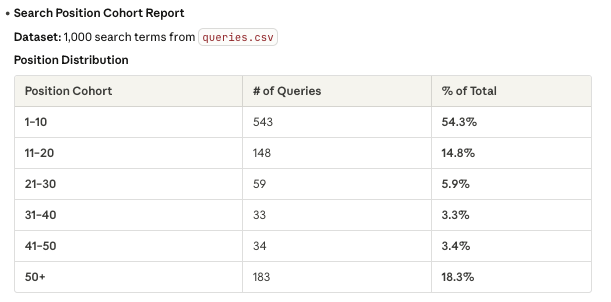
Six months ago, our marketing team faced a familiar challenge: we needed to scale content production to capture organic search traffic, but we didn't have the headcount to write hundreds of articles. Today, we rank on page 1 for over 543 search terms—53% of every keyword we've targeted. Our blog traffic grows 40% every single month. Our AI referral traffic doubles every 30 days.
And we didn't hire a single writer.
This is the story of how we built an AI Worker that runs our entire SEO operation on autopilot—and how three of our customers are now doing the same thing.
The Results
While others are struggling with reduced clicks, impressions, and traffic we're growing. This is something Agentforce, Microsoft Copilot, and Surfer can't do. We're doing it and can help you get results like these in 30 days.
We expected more content. We got that. What surprised us was what happened when we removed ourselves from the process entirely.
There's no editorial calendar we manage. No drafts sitting in approval queues. No bottleneck where content waits for someone to review it. The system runs autonomously—and the results have been more consistent than anything we achieved with human oversight.
Consistent Growth
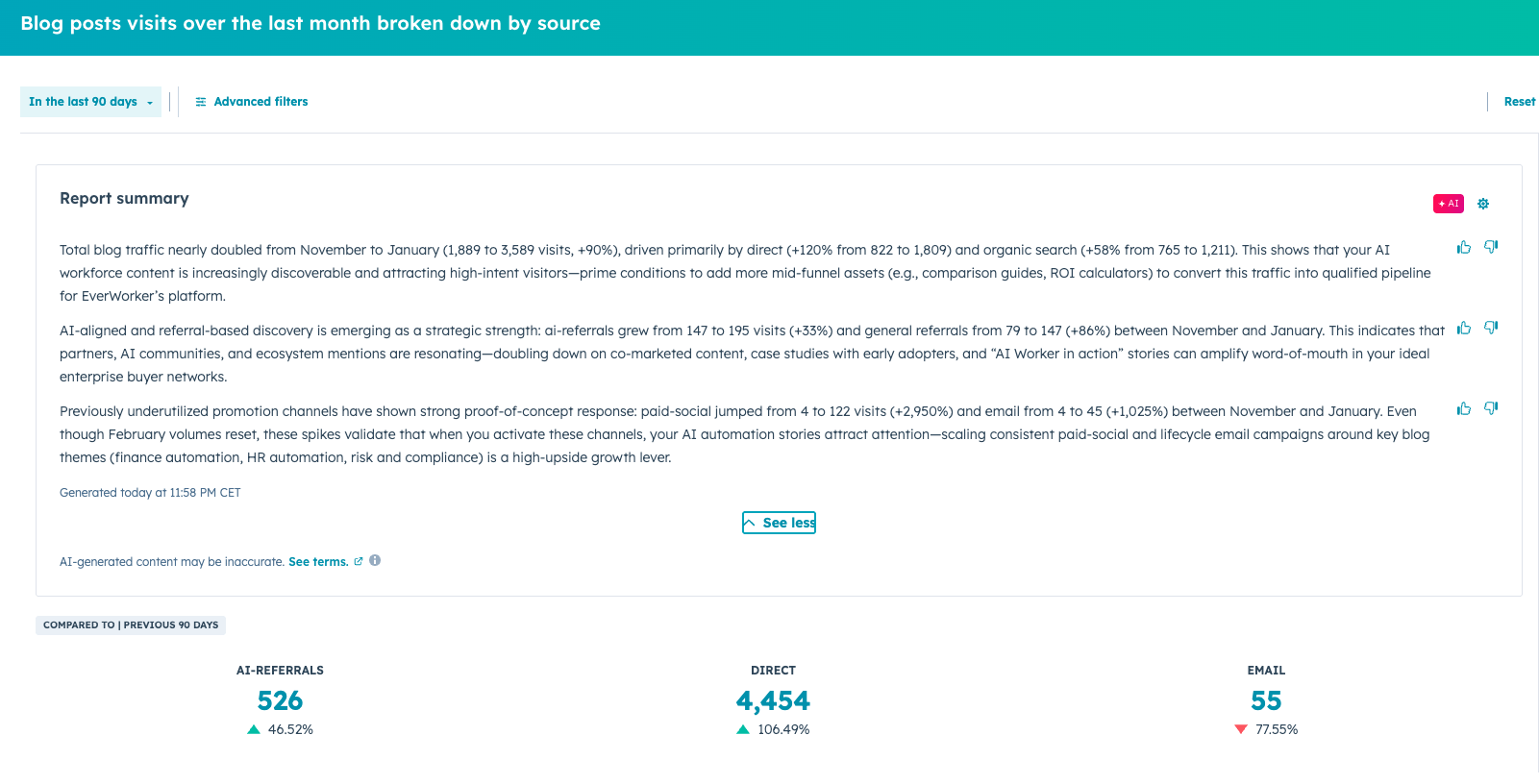
Our AI referral traffic—visitors coming from AI-powered search tools and assistants—has grown 100% month over month for multiple quarters. This channel barely existed 6 months ago. Now it's becoming a significant source of qualified traffic.
The 40% monthly growth in blog traffic has held steady across multiple quarters. That kind of consistency doesn't come from viral hits or promotional spikes. It comes from systematic coverage of the topics our buyers are searching for.
AI Search Summary Placement
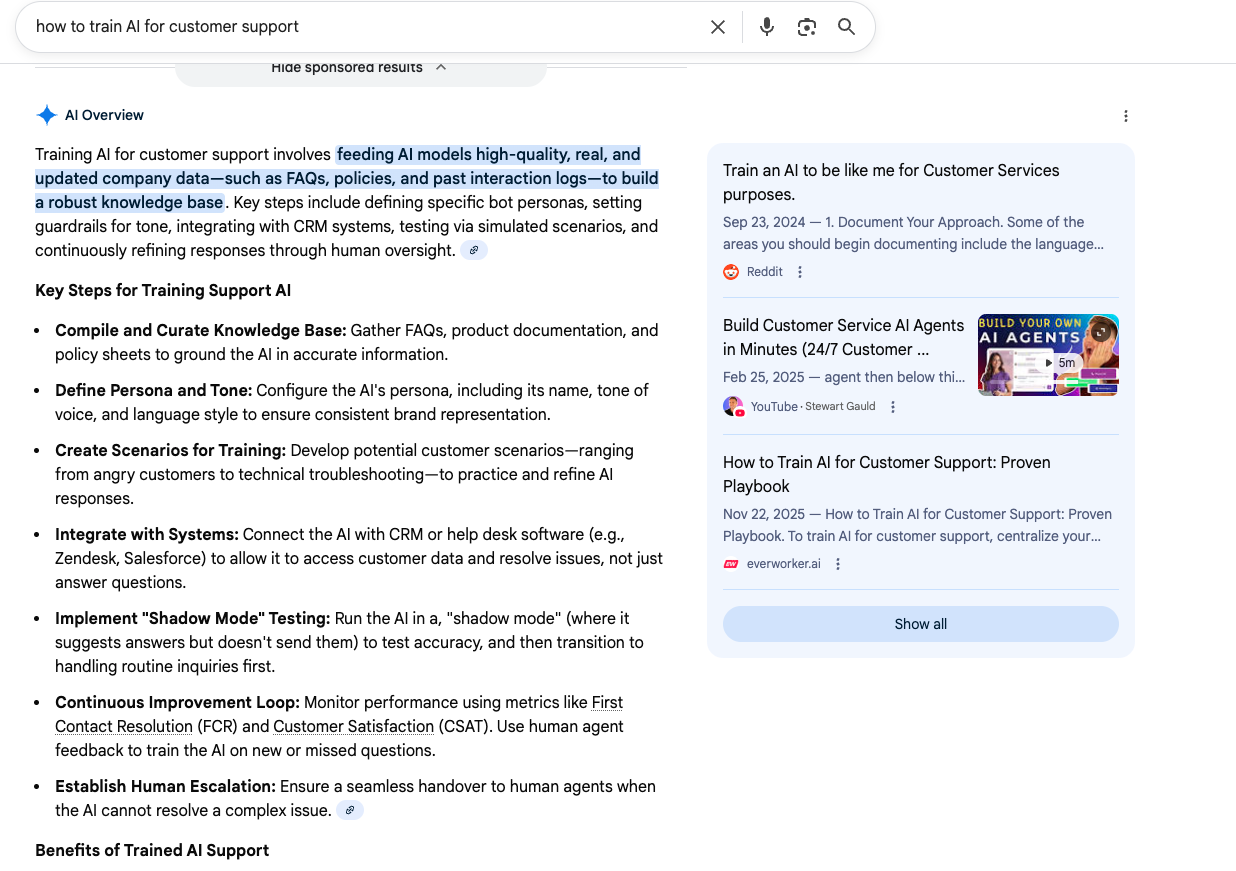
For every keyword where we rank on page 1, we're now appearing in AI-generated search summaries. This isn't a separate strategy—it's a byproduct of the same approach. High-quality, well-structured content that genuinely answers search intent gets picked up by traditional algorithms and AI systems alike.
What We Built: An End-to-End Content Engine
Most companies using AI for content are still copy-pasting from ChatGPT into their CMS. We took a different approach. We built an AI Worker that handles the complete workflow—seventeen distinct operations that transform a keyword into a fully optimized, published article without a single human touchpoint.
This is what the workflow looks like. It takes persona and keyword as input and is invoked by our scheduling feature which calls a keyword research AI worker every day.
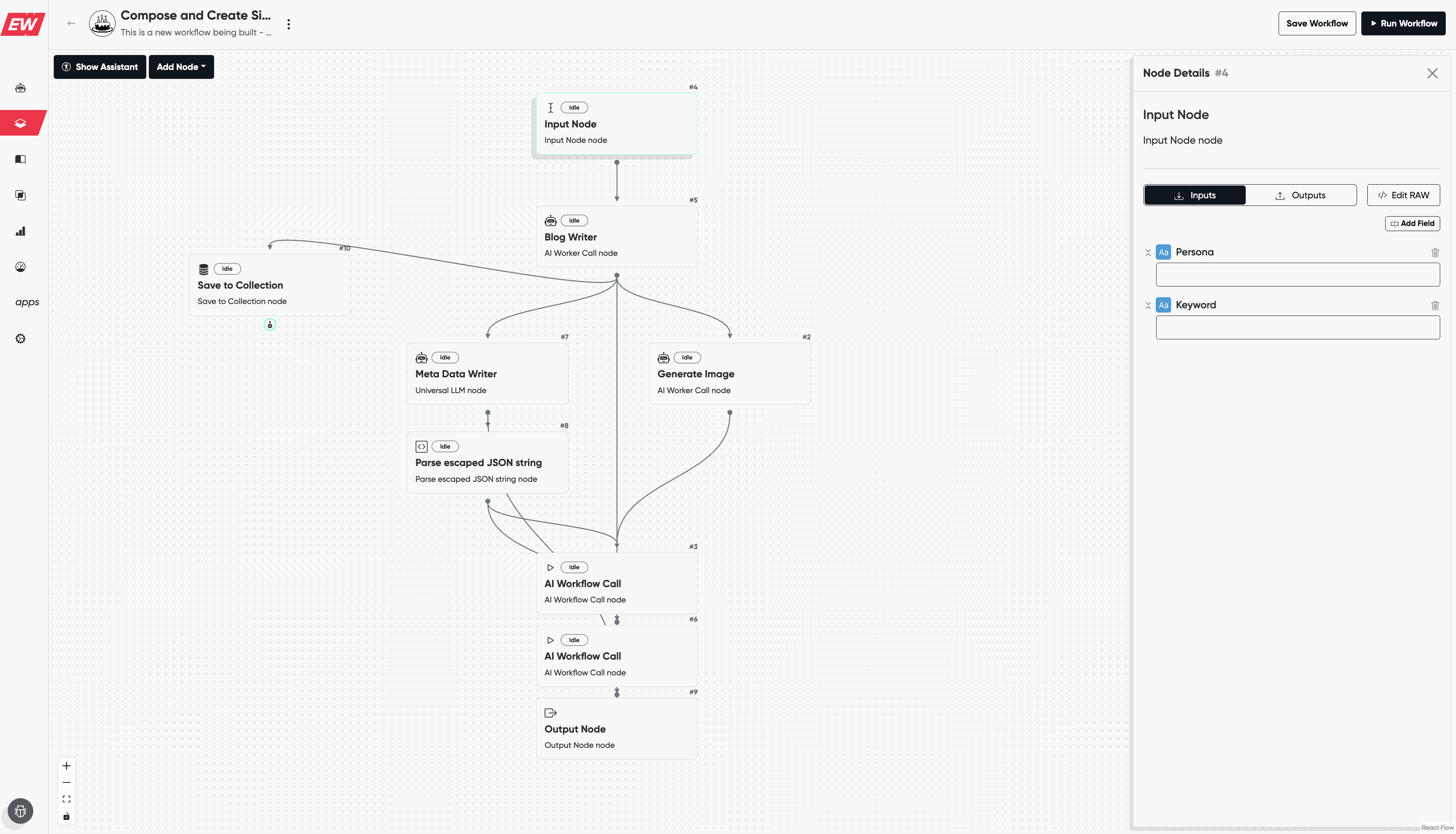
Keyword Research — The worker continuously identifies high-intent search terms aligned with our target personas. It tracks what we've already covered and prioritizes gaps in our content library, maintaining memory across runs so it never duplicates effort.
Content Research — For each keyword, the worker analyzes top-ranking content, extracts key themes, and identifies angles competitors have missed.
Third-Party Research and External Linking — The worker finds high-quality third-party research—industry reports, academic studies, authoritative sources—reads them, weaves the data into the narrative, and adds external links that strengthen credibility and provide genuine value to readers.
Outlining and Copywriting — This isn't template-based content generation. The worker has five copywriting frameworks built in for storytelling. It modulates sentence length and tonality throughout each piece, strategically deploys tables, bullet points, and formatting based on content type and reader intent. Every article reads like it was crafted, not generated.
On-Page Optimization — The worker calculates and hits target keyword density, generates 20 semantically relevant long-tail phrases, and incorporates them naturally throughout the content. No keyword stuffing—just comprehensive topical coverage that signals relevance to search algorithms.
AI Answer Optimization — Every article opens with two sentences specifically optimized for featured snippet recognition. Each section begins with a featured-snippet-optimized paragraph. When AI search tools pull answers from our content, they're pulling from text we designed to be extracted.
FAQ Optimization — The worker searches for commonly asked questions about the topic and dynamically generates an FAQ section addressing questions that don't fit naturally into the article's main flow. This captures long-tail search traffic and provides additional entry points for AI-generated answers.
CTA Inclusion — Based on search intent, the worker generates on-brand calls-to-action using HTML—book a demo, download a whitepaper, or enroll in EverWorker Academy. The right offer meets the reader at the right moment in their journey.
Meta and Technical SEO — Meta descriptions are automatically generated. H1, H2, H3, and H4 tags are structured for both readability and search performance. URL slugs are optimized for clarity and keyword inclusion.
A 25,000+ token instruction set inside the research and write agent node does the heavy lifting.
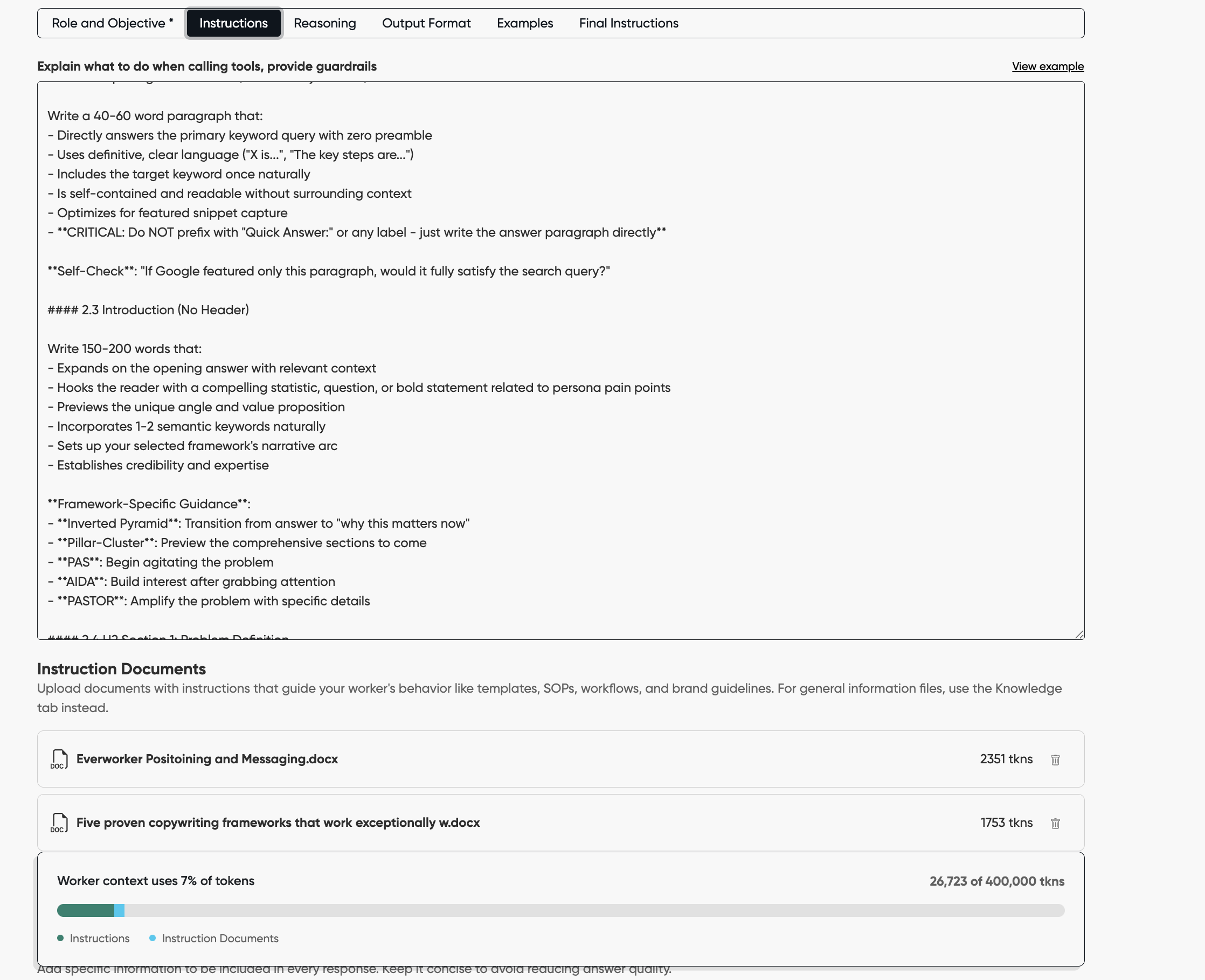
Image Generation — Custom visuals are created for each piece, eliminating the stock photo hunt entirely.
Publishing to HubSpot — The finished article—complete with HTML formatting, generated image, meta data, assigned author from our team, and article tags—uploads directly to our HubSpot blog. We then bulk publish hundreds of articles with two button clicks.
Vector Memory and Persona Intelligence — The worker operates from its own vector memory containing our messaging and positioning frameworks, AI solution narratives for key market segments, and a persona database with hundreds of detailed buyer profiles. These personas are generated dynamically by our Persona Universe Generator AI Worker—another tool included in our Marketing AI Solution. Every piece of content is informed by deep context about who we're writing for and what matters to them.
This runs with zero human-in-the-loop review or approval. Completely autonomous. The worker executes on schedule, makes decisions based on its training and memory, and publishes without asking permission.
The entire workflow runs separate instances for each target persona and vertical, each with its own strategic focus. This quarter, we'll publish over 600 articles. Fully on autopilot.
From Internal Tool to Customer Solution
When something works this well internally, the natural question is: can we package this for customers?
The AI Worker powering our SEO engine is now available as a template in our Marketing AI Solution. We've already deployed customized versions to three customers:
A B2B SaaS AI Startup — They needed to establish thought leadership in a competitive space. We configured the worker for their technical audience and subject matter expertise.
A B2B Developer Tools Vendor — Their content needed to balance technical depth with accessibility. The worker was tuned to their documentation style and developer-focused tone.
A Financial Services Company — Compliance and accuracy are non-negotiable. We built in additional validation steps and configured the worker for their regulatory requirements.
Each deployment took less than three hours to customize. Within days, these businesses had AI Workers publishing content to their own systems—not as a service we run for them, but as capability they own and control.
What's Next: Video on Autopilot
We're currently connecting this workflow to our Video AI Worker. The integration is straightforward: when an article publishes, it triggers a second workflow. The Video Worker receives the article text, generates a script, produces a video, and publishes directly to our YouTube channel.
Same topic. Same message. Multiple formats. Zero additional effort.
This isn't about replacing creative judgment—it's about removing the mechanical work that prevents good ideas from reaching audiences. The strategy still comes from us. The execution happens at scale.
The Shift We're Seeing
Content marketing has always been a volume game constrained by human capacity. You can have quality or quantity, but getting both meant either massive teams or massive budgets.
That constraint is dissolving. The question isn't whether AI can write good content—it's whether you can build systems that produce good content reliably, at scale, without constant supervision.
We've answered that question for ourselves. Three customers are answering it for their businesses. The playbook is proven. The results compound.
If you're still writing articles one at a time, you're not just moving slowly. You're falling behind companies that figured out how to turn content production into a system rather than a task.
Want to see how the SEO AI Worker could work for your business? We'll build a custom demo tailored to your content strategy—before you commit to anything.




 Anton Antich
 Austin Braham
 Christopher Good