


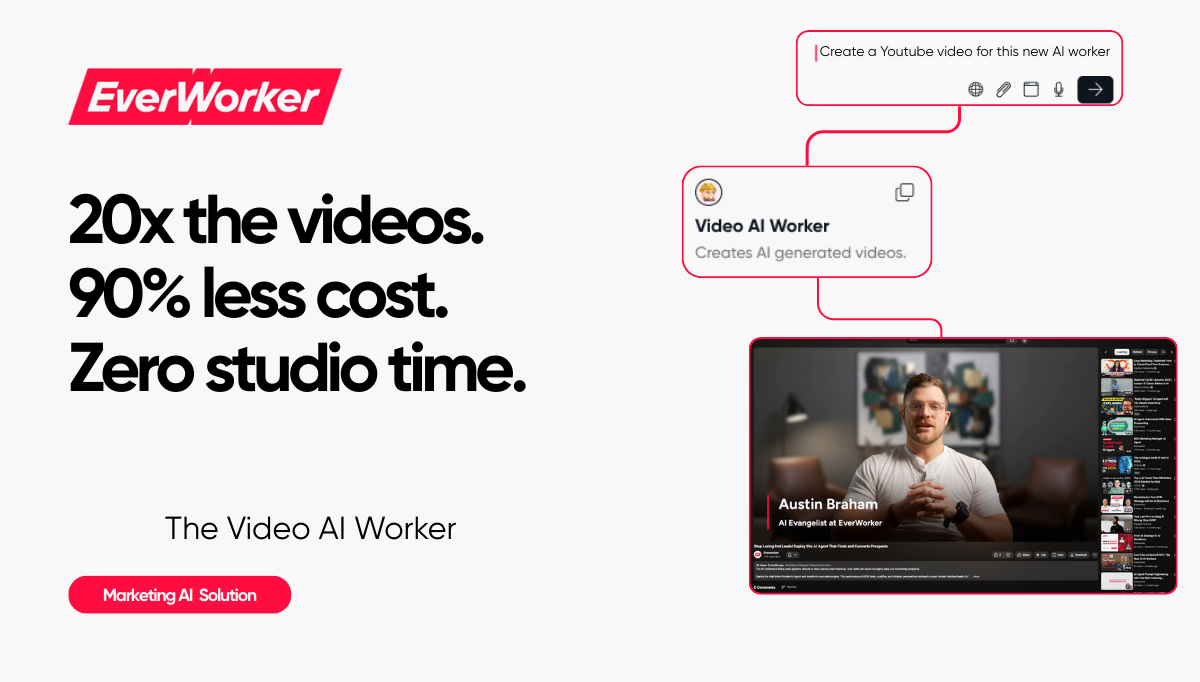
Wyzowl research shows 91% of businesses now use video as a marketing tool, and 70% of B2B buyers engage with video during purchasing decisions. Yet for most marketing teams, video remains the "holy grail" of content—everyone knows it drives 3x higher engagement than text, but the reality of producing it is a nightmare of expensive studios, endless editing cycles, and weeks of delay.
This is the "Video Bottleneck" that has plagued PMM teams for a decade. Your quarterly plan calls for video content, but the math never works: traditional production costs $1,500–$7,000 per minute, requires 2–4 weeks per asset, and by the time the video ships, the market has already moved.
I remember one specific launch where we spent $10,000 on a single product explainer video. By the time it was finished—three weeks late—the UI had changed twice, and the video was already obsolete. We were moving at the speed of the market, but our content was moving at the speed of a traditional production house.
The Video Marketing AI Worker changes that entire dynamic. This article shows you exactly how it works, what it produces, and how to build one for your organization.
What the Video Marketing AI Worker Does
The Video Marketing AI Worker functions as your always-on video production team. It transforms video content from expensive, time-consuming productions into scalable content streams. You provide the topic, key messages, and style preferences—and it delivers professional video content without cameras, studios, or editing suites.
This AI Worker:
- Writes video scripts optimized for engagement and your brand voice
- Generates AI-powered videos with synthetic presenters or animated explainers
- Creates thumbnails and titles optimized for click-through
- Prepares videos for distribution across YouTube, LinkedIn, TikTok, and Instagram Reels
- Automatically repurposes long-form videos into 5–10 short-form clips
- Integrates with Synthesia, HeyGen, Descript, YouTube, Vimeo, Wistia, and social platforms
Instead of piecemeal AI tools, this AI Worker operates through orchestrated agent workflows: Script Writing Agent → Storyboard Agent → Video Generation Agent → Editing Agent → Thumbnail Agent → Distribution Agent—each performing its task and collaborating for a frictionless topic-to-published-video journey.
What Is an AI Worker?
Before we go any further, let me clarify what this is—because it represents a fundamental shift in how we should think about AI.
An AI Worker is not a chatbot. It's not a video assistant. It's not a tool you prompt.
An AI Worker is a digital employee with permanent knowledge, specialized skills, and the ability to execute complex workflows autonomously. You don't have a conversation with it. You delegate to it.
Think about the difference between asking a colleague a question versus assigning them a project. When you assign a project, you expect them to already understand the context of your business, know how to do research without being told, follow your established processes and quality standards, use the right tools for the job, and deliver finished work—not drafts that need extensive editing.
That's what an AI Worker does. And the Video Marketing AI Worker does it for video content at scale.
How It Works: The Complete System
The Video Marketing AI Worker transforms a simple input—a video topic, key messages, target length, and style preference—into fully produced, platform-ready video content. No studio bookings. No editing software. No weeks of back-and-forth.
Here's what happens under the hood:
Phase 1: Intelligent Script Development
When the AI Worker receives your video brief, it doesn't immediately start writing. It starts thinking.
Context Analysis: The worker retrieves your brand guidelines, product information, and past video performance data from its knowledge base. It understands what's worked before and what your audience responds to.
Audience Mapping: Based on your target audience and distribution channel, it selects the appropriate tone, pacing, and structure. A LinkedIn explainer video requires different treatment than a TikTok product demo.
Competitor Research: The worker analyzes top-performing videos in your category, identifying patterns in hooks, structure, and calls-to-action that drive engagement.
Phase 2: Visual Strategy Selection
The AI Worker has multiple proven video formats built into its knowledge:
- Synthetic Presenter: AI-generated spokesperson delivering your message with natural expressions and gestures
- Animated Explainer: Motion graphics and character animation for complex concepts
- Screen Capture + Voiceover: Product demos and tutorials with AI-generated narration
- Mixed Format: Hybrid approaches combining presenter segments with animated overlays
The AI Worker selects the appropriate format based on your content type, audience preferences, and platform requirements. This isn't random selection—it's pattern matching against your historical performance data and industry benchmarks.
Phase 3: Production Execution
Now the AI Worker produces. But unlike a chatbot generating generic content, it follows a precise production architecture:
Script Finalization: The script is optimized for spoken delivery—sentence length, natural pauses, emphasis points—ensuring the AI presenter or voiceover sounds human, not robotic.
Visual Storyboarding: Each scene is mapped with specific visual elements, transitions, and timing. The worker determines exactly what appears on screen at each moment.
Asset Generation: Using integrations with Synthesia, HeyGen, or your preferred video platform, the worker generates the actual video content—presenter footage, animations, or screen recordings.
Phase 4: Quality Assurance
Before delivery, the AI Worker executes a comprehensive quality pass. It asks itself:
- Does this video match our brand voice and visual identity?
- Is the pacing appropriate for the target platform and audience?
- Are all product claims accurate and current?
- Does the call-to-action align with campaign objectives?
- Is the thumbnail optimized for click-through on this platform?
These guardrails are in the system, not in manual review.
Phase 5: Distribution and Repurposing
The final output isn't just one video. The AI Worker delivers:
- Full-length video in platform-optimized formats
- 5–10 short-form clips extracted from key moments
- Custom thumbnails for each platform
- Optimized titles and descriptions with relevant hashtags
- Distribution schedule mapped to optimal posting times
One idea now fuels your YouTube channel, LinkedIn feed, TikTok presence, and Instagram Reels for an entire week.
The Results: What AI-Powered Video Production Looks Like
The organizational impact here isn't just "more video"—it's a fundamental shift in how marketing teams allocate resources.
| Metric | Result |
|---|---|
| Video Production | 20–40 videos per month vs. 2–4 manually |
| Production Cost | 90% reduction in video creation costs |
| Time-to-Publish | Videos completed in hours, not weeks |
| Engagement | Video content drives 3x higher engagement than text |
| Repurposing | Each long-form video yields 5–10 short-form clips |
Let me put this in perspective:
Drastic Cost Efficiency: A 90% reduction in video creation costs means you can take that massive production budget and re-invest it into paid media or high-level strategic research.
Agility at Scale: Time-to-publish drops from weeks to mere hours. If a competitor drops a new feature at 9:00 AM, your team can have a professional video response—complete with scripts, synthetic presenters, or animated explainers—ready by lunch.
The Multiplying Effect: Every long-form video the AI generates yields 5–10 short-form clips. This means one single idea suddenly fuels your TikTok, Instagram Reels, and LinkedIn feeds for a week.
Moving Beyond "The Camera": The biggest psychological hurdle for most teams has always been the camera. Most product experts are camera-shy, or they simply don't have the time to sit in a studio. Because this worker uses synthetic presenters and automated storyboarding, you no longer need cameras or studios to deliver professional content. Your team can now focus on what they do best—the message and the strategy—while the agent orchestration handles the execution.
Build Your Own Video Marketing AI Worker
The Video Marketing AI Worker is built on EverWorker's AI Worker platform. That means you can build something similar for your own organization—customized to your brand, audience, video style, and distribution channels.
Here's what it takes:
Step 1: Document Your Video Process
Start by articulating exactly how your best videos get created. What research does your team do before scripting? What makes a good hook at your company? What's your preferred pacing and structure? The more specific you can be, the better your AI Worker will perform.
Step 2: Define Your Quality Bar
Upload examples of your best-performing videos. Define what "good" looks like. Include your brand voice guidelines, visual identity standards, and approved messaging frameworks. This is what makes the output feel like your brand, not generic AI content.
Step 3: Build In Self-Checks
Throughout the AI Worker's instruction set, embed self-checks: "Does this script match our brand voice?" "Is this claim accurate based on current product specs?" "Is the thumbnail optimized for this platform?" These guardrails maintain quality at scale.
Step 4: Connect Your Tools
EverWorker uses universal connectors to integrate with your existing stack. The Video Marketing AI Worker connects to Synthesia or HeyGen for video generation, Descript for editing, and your distribution platforms like YouTube, Vimeo, LinkedIn, TikTok, and Instagram. Your AI Worker uses these tools autonomously—no manual handoffs.
Step 5: Iterate from Assist to Autonomous
Don't start with full automation. Start with what we call "agent assist"—working interactively with the AI until you've validated the exact input format and output quality you want. Once you've reviewed enough outputs to trust the system, promote it to autonomous.
This progression is how you build reliable AI Workers.
Ready to Build Your Own?
If you're ready to stop treating video as a "special project" and start treating it as a scalable content stream, we have two paths forward:
Book a Strategy Call: Get a personalized roadmap for your AI webinar engine. We'll map your current process, identify automation opportunities, and show you exactly what an AI-powered webinar workflow would look like for your organization.
Enroll in EverWorker Academy: Our free certification program teaches you how to build AI Workers like the Webinar Marketing AI Worker. Learn the principles, see the patterns, and apply them to your own use cases.
The Future of Video Marketing
Here's what I want you to take away from this:
If you can describe the work, you can automate it.
The barrier isn't technology—it's clarity of process. The marketing teams that will win in the next decade aren't necessarily the ones with the biggest production budgets or the most expensive agencies. They're the ones that can clearly articulate what excellent video looks like and encode that understanding into AI Workers.
This isn't about AI replacing video producers. It's about AI handling the execution so your team can focus on what actually requires human judgment: messaging strategy, creative direction, audience insight, and the ideas that make content worth watching.
In a world where attention is the primary currency, being able to flood the market with high-quality, relevant video content—without the traditional overhead—is how you win.
That's what the Video Marketing AI Worker can give you. And it's what AI Workers can give you too.




 Ameya Deshmukh
 Anton Antich
 Austin Braham